




loader image

Pediatric Eye Exams in Vancouver, BC

Children’s Eye Exams Clinic in Vancouver, BC

Children’s eyes are still developing, which means regular eye exams are essential to healthy vision, confident reading, and strong school performance. Lucent Family Eye Care is a top-rated Vancouver eye clinic for pediatric eye exams, trusted by parents across Marpole, Oakridge, Kerrisdale, and the Lower Mainland. Our expert Doctors of Optometry have specialized training and gentle techniques that make exams engaging and stress-free, even for the youngest patients.

Difficulty in School or with Homework?

If your child is struggling in school or with homework, their vision may be a contributing factor. Research indicates that approximately 80% of learning is visual, so any difficulty seeing clearly can significantly impact a child’s academic performance.
To support healthy growth and development, it is essential to have your child’s eyes and vision evaluated by an eye care professional at key stages throughout their development. Regular eye examinations help ensure that children have the visual resources they need to succeed in and out of the classroom.

Why is an eye exam so essential for children before they start school?

When Does My Child Need An Exam?

A baby’s visual system develops gradually over the first few months of life. They must learn to focus and move their eyes and use them together as a team. The brain also needs to learn how to process the visual information from the eyes to understand and interact with the world. With the development of eyesight, also comes the foundation for motor development such as crawling, walking and hand-eye coordination.

You can ensure that your baby is reaching milestones by keeping an eye on what is happening with your infant’s development and by ensuring that you schedule a comprehensive infant eye exam at 6 months. At this exam, the eye doctor will check that the child is seeing properly and developing on track and look for conditions that could impair eye health or vision (such as strabismus (misalignment or crossing of the eyes), farsightedness, nearsightedness, or astigmatism).

Since there is a higher risk of eye and vision problems if your infant was born premature or is showing signs of developmental delay, your eye doctor may require more frequent visits to keep watch on his or her progress.

The toddler and preschool age is a period where children experience drastic growth in intellectual and motor skills. During this time they will develop the fine motor skills, hand-eye coordination and perceptual abilities that will prepare them to read and write, play sports and participate in creative activities such as drawing, sculpting or building. This is all dependent upon good vision and visual processes.

This is the age when parents should be on the lookout for signs of lazy eye (amblyopia) – when one eye doesn’t see clearly, or crossed eyes (strabismus) – when one or both eyes turns inward or outward. The earlier these conditions are treated, the higher the success rate.

Parents should also be aware of any developmental delays having to do with object, number or letter recognition, color recognition or coordination, as the root of such problems can often be visual. If you notice your child squinting, rubbing his eyes frequently, sitting very close to the tv or reading material, or generally avoiding activities such as puzzles or coloring, it is worth a trip to the eye doctor.

Proper learning, motor development, reading, and many other skills are dependent upon not only good vision, but also the ability of your eyes to work together.

Children that have problems with focusing, reading, teaming their eyes or hand-eye coordination will often experience frustration, and may exhibit behavioral problems as well. Often they don’t know that the vision they are experiencing is abnormal, so they aren’t able to express that they need help.

In addition to the symptoms written above, signs of vision problems in older children include:

  • Short attention span
  • Headaches
  • Frequent blinking
  • Avoiding reading
  • Tilting the head to one side
  • Losing their place often while reading
  • Double vision
  • Poor reading comprehension
  • The Pediatric Eye Exam

In addition to basic visual acuity (distance and near vision) an eye exam may assess the following visual skills that are required for learning and mobility:

Binocular vision: how the eyes work together as a team

  • Focusing
  • Peripheral Vision
  • Color Vision
  • Hand-eye Coordination
  • Tracking

Following the guidelines for children’s eye exams and staying alert to any signs of vision problems can help your child to reach his or her potential.

At What Age Should My Child Have Their First Eye Exam?

Your child should have their first comprehensive eye exam between six and twelve months of age, a second exam between three and five years old, and annual exams once they start school. Vision screenings at the pediatrician are helpful but do not replace a full exam by a Doctor of Optometry, who can detect subtle issues that affect learning and development.

What Does a Children’s Eye Exam Include?

A pediatric eye exam at our Vancouver clinic includes an age-appropriate visual acuity test, eye teaming and focusing assessment, colour vision testing, refraction, assessment of eye movement, inspection of the front and back of the eye, and a review of findings with parents. For younger children, we use engaging, non-verbal techniques so cooperation is never a barrier.

What Are the Signs My Child Needs an Eye Exam?

Signs that your child may need an eye exam include sitting close to screens or books, frequent squinting, rubbing the eyes, headaches, avoiding reading, short attention span, eye turning in or out, head tilting, and struggling with schoolwork. Many children do not realize their vision is blurry because they have always seen the world that way.

Can You Check a Child Who Cannot Read Letters Yet?

Yes. Our Vancouver pediatric exam protocols include shape-matching charts, retinoscopy, and other techniques that do not require your child to read letters or speak. This means we can check the vision of infants, toddlers, and children with communication differences using objective methods.

Does MSP Cover Kids’ Eye Exams in BC?

Yes. MSP in British Columbia covers one routine comprehensive eye exam per year for children under 19. Our Vancouver clinic will bill MSP directly for eligible visits. Additional exams or medically necessary follow-ups for eye conditions are typically also covered.

Proudly Serving Patients Across Vancouver and the Lower Mainland

Lucent Family Eye Care is a trusted optometrist and eye clinic serving patients from across Vancouver and the surrounding communities. We welcome families from Marpole, Oakridge, Kerrisdale, South Vancouver, Shaughnessy, Dunbar, Kitsilano, Downtown Vancouver, the West End, Richmond, and Burnaby who are looking for an expert Doctor of Optometry close to home. Whether you are visiting from South Vancouver for a comprehensive eye exam, driving in from Kitsilano for dry eye treatment, bringing your child from Kerrisdale for a pediatric eye exam, or stopping by from Downtown Vancouver for designer eyewear, our Vancouver eye clinic is easy to reach and built around your family’s vision needs.

Computer Vision Syndrome

With the increasing use of digital devices it is important to teach your children how to protect their eyes while they are still young.

Myopia Control

Myopia is a common vision problem affecting children who can see well up close, but have problems seeing in the distance.

Vision Therapy For Children

Vision Therapy is a program of progressive eye exercises, designed to treat conditions like strabismus and amblyopia.

Meet Our Pediatric Eye Doctor

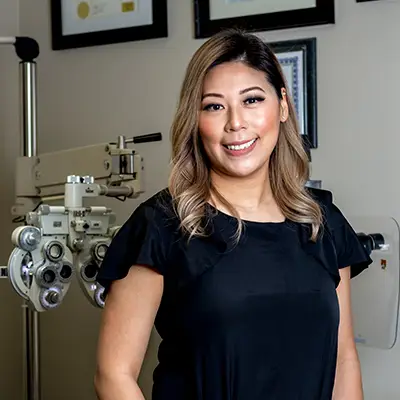
Dr. Linda Yee

Dr. Linda Yee obtained her doctorate degree in optometry with high honours from the prestigious University of Waterloo School of Optometry, the only English-speaking Optometry school in Canada. Prior to that, she earned her Bachelor of Science degree in Chemistry at The University of British Columbia. Dr. Yee completed specialty ophthalmology ocular disease training at the Bethesda Laser & Cataract Institute in Bethesda, Maryland where she examined patients with a multitude of eye diseases and assisted with both LASIK and cataract surgeries. She is also an active member of the Canadian Optometric Association and BC Optometric Association, allowing her to stay up to date with advances in the eye care industry.
 
Dr. Yee strives to provide her patients with the utmost care through a comprehensive vision and eye health exam so that they can maintain healthy vision for now and the future. Dr. Yee provides eye exams in English, Cantonese, Mandarin, and Korean. When she is not working, Dr. Yee loves travelling & experiencing different cultures, playing volleyball, and improving on her new language, Korean. In the past, Dr. Yee has provided voluntary humanitarian eye care in third world country missions, which has enriched her experiences with providing ophthalmic care. In the future, she would like to participate in more eye care missions if the opportunity arises.