
loader image

Presbyopia Optometrist in Vancouver, BC

Presbyopia Eye Exams in Vancouver, BC

If you have started holding your phone further away or struggling with the menu in dim restaurants, you may be developing presbyopia. Lucent Family Eye Care is a top-rated Vancouver eye clinic that helps adults over 40 restore comfortable reading vision with expert optometry, advanced diagnostics, and a full range of premium lens options.

What Is Presbyopia?

Presbyopia is the natural age-related loss of focusing flexibility in the lens of the eye. It typically begins in the early to mid forties and gradually progresses over the following decade. Because it affects everyone eventually, finding the right correction is about comfort, lifestyle, and style, not just vision.

At What Age Does Presbyopia Usually Start?

Presbyopia usually starts between the ages of 40 and 45. Some patients notice it earlier, particularly if they do a great deal of close work or have certain refractive conditions. Regardless of when it begins, presbyopia is a normal, universal change, and there are excellent solutions available.
What Are the Signs of Presbyopia in Vancouver?

Early signs include needing more light to read, holding menus or phones at arm’s length, tired eyes after reading, headaches after close work, and difficulty switching focus between close and distant tasks. If this sounds familiar, book a comprehensive eye exam, so your Doctor can assess your near vision precisely.

Reading glasses or “readers” are basically magnifying glasses that are worn when reading or doing close work that allow you focus on close objects.

Eyeglasses with bifocal or multifocal lenses such as progressive addition lenses or PALs are a common solution for those with presbyopia that also have refractive error (nearsightedness, farsightedness or astigmatism). Bifocals have lenses with two lens prescriptions; one area (usually the upper portion) for distance vision and the second area for near vision.

Progressive addition lenses or PALs similarly provide lens power for both near and distance vision but rather than being divided into two hemispheres, they are made with a gradual transition of lens powers for viewing at different distances.  Many individuals prefer PALs because unlike bifocals, they do not have a visible division line on the lens.

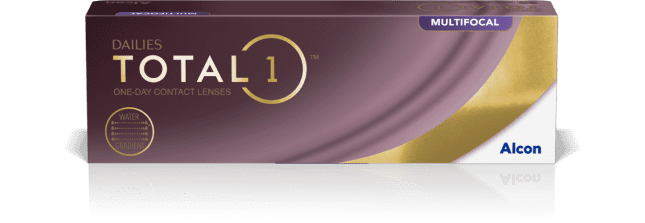
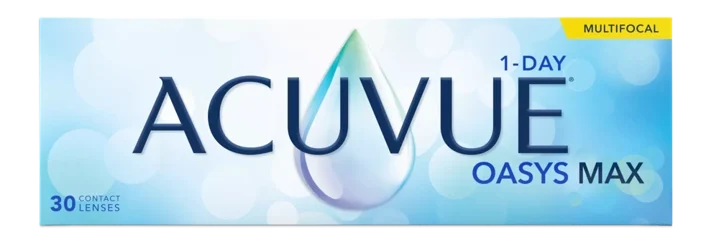
For individuals that prefer contact lenses to glasses, bifocal and multifocal lenses are also available in contact lenses in both soft and Rigid Gas Permeable (RGP) varieties.

Multifocal contact lenses give you added freedom over glasses and they allow you to be able to view any direction – up, down and to the sides – with similar vision. People wearing progressive lenses in glasses on the other hand have to look over their glasses if they want to view upwards or into the distance.

Another option for those who prefer contact lenses is monovision. Monovision splits your distance and near vision between your eyes, using your dominant eye for distance vision and your non-dominant  eye for near vision.

Typically you will use single vision lenses in each eye however sometimes the dominant eye will use a single vision lens while a multifocal lens will be used in the other eye for intermediate and near vision. This is called modified monovision.  Your eye doctor will perform a test to determine which type of lens is best suited for each eye and optimal vision.

There are surgical procedures also available for treatment of presbyopia including monovision LASIK eye surgery, conductive keratoplasty (CK), corneal inlays or onlays or a refractive lens exchange (RLE) which replaces the hardened lens in the eye with an intraocular lens (IOL) similar to cataract surgery.

Since it affects so much of the older population, much research and development is going into creating more and better options for presbyopes. Speak to your eye doctor about the options that will work best for you.

Monovision LASIK

Monovision is a technique that began with presbyopia-correcting contact lenses designed for individuals with presbyopia and nearsightedness or astigmatism. Each eye gets a different lens power – one lens is used in the dominant eye to correct for distance vision and the other for near vision. The eyes adapt to the two lens powers by learning to use the appropriate eye for the necessary distance power.

Monovision LASIK surgery is based on the same principle of correcting each eye for a different refractive power and has shown just as high if not higher success rates than the contact lens technique. Usually, patients will try out monovision with contacts first to ensure that it works and that the eyes adapt properly.

PresbyLASIK

PresbyLASIK is a procedure that is currently available in Canada and Europe and undergoing clinical trials in the United States. As opposed to monovision LASIK, this procedure is a multifocal alternative in which different rings of refractive power are created on the cornea, similar to multifocal lenses. This provides vision correction at all distances simultaneously.

Conductive Keratoplasty uses radio waves via a hand-held instrument to mold the corneal surface to improve near vision. The procedure can be done on one eye using the monovision principle and is a good solution for those that do not need vision correction for nearsightedness or astigmatism. The effects of CK, however are not permanent and the improvement in near vision will diminish over time.

Corneal inlays and onlays involve surgically implanting a small lens into the eye to increase focus and near vision. The distinction between inlays and onlays is in where the lens is placed on the eye.

In refractive lens exchange the eye’s hardened lens is replaced with an artificial lens called an intraocular lens (IOL) to provide multifocal vision. This surgery is similar to and often done in conjunction with cataract surgery.

How Is Presbyopia Treated?

Treatment options include reading glasses, progressive lenses that combine distance, intermediate, and near vision in one lens, multifocal contact lenses, monovision contact lenses, and premium lens designs from brands like Hoya, Essilor, and Nikon. The right choice depends on your lifestyle, prescription, and preferences.

What Are Progressive Lenses?

Progressive lenses, also called no-line bifocals, are modern eyeglass lenses that smoothly transition between distance, intermediate, and near prescriptions. Our Vancouver opticians fit thousands of pairs a year and can help you select the design and material that best fits your face, frame choice, and typical tasks.

Can I Wear Contact Lenses If I Have Presbyopia?

Yes. Multifocal contact lenses and monovision contact lenses allow many patients to continue enjoying contact lens wear well into their 40s, 50s, 60s, and beyond. Our Doctors of Optometry are highly experienced in fitting presbyopic contact lenses, including in challenging prescriptions.

How Do I Book a Presbyopia Consultation in Vancouver?

Book a comprehensive eye exam online or by calling 604 777 7579 and let us know you would like to explore presbyopia options. We will allow extra time for lens demonstrations and personal recommendations from our optometrists and opticians.