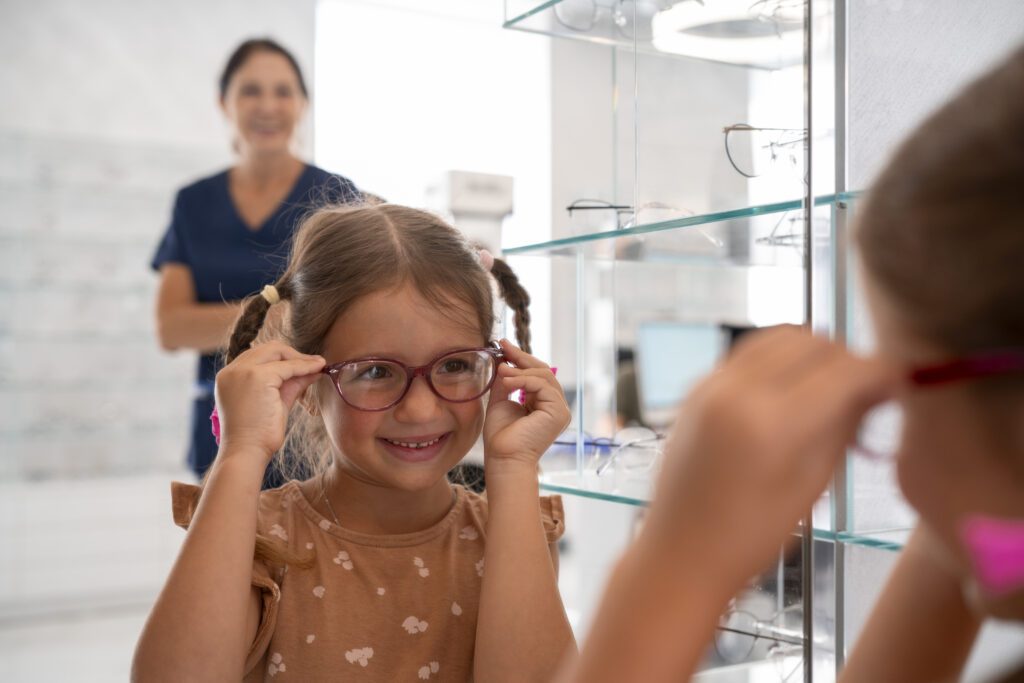
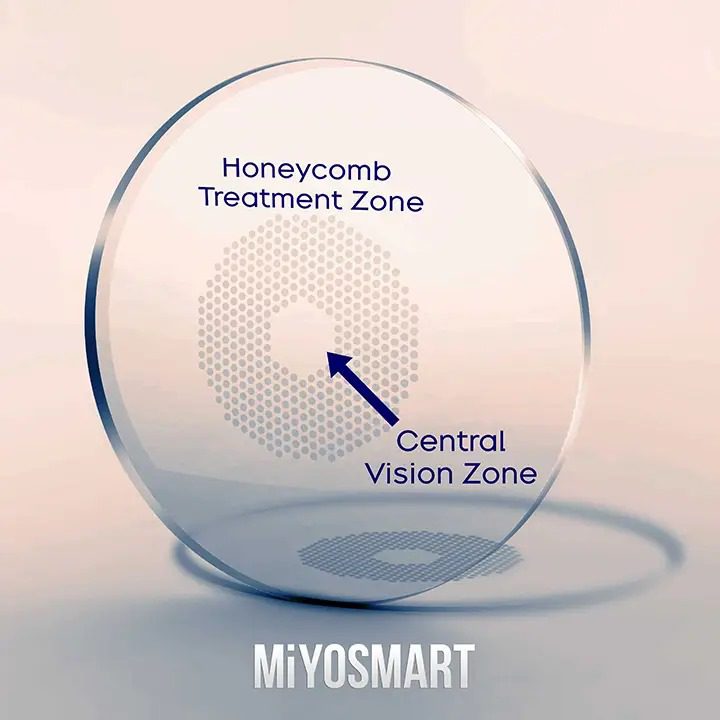


Myopia management uses specialized lenses or eye drops to slow how quickly a child’s nearsightedness worsens — typically by around 50%. Our Vancouver clinic offers every evidence-based option: orthokeratology (Ortho-K) overnight lenses, myopia-control glasses, daily soft multifocal contact lenses, and low-dose atropine drops, with baseline diagnostics to track results over time.
There is no single best option. The right choice depends on your child’s age, prescription, sports and hobbies, dry eye status, and how quickly the myopia is progressing. Your Doctor of Optometry will recommend a plan at a dedicated myopia assessment and adjust it as your child grows.


We typically work with children and teens who show one or more of the following:
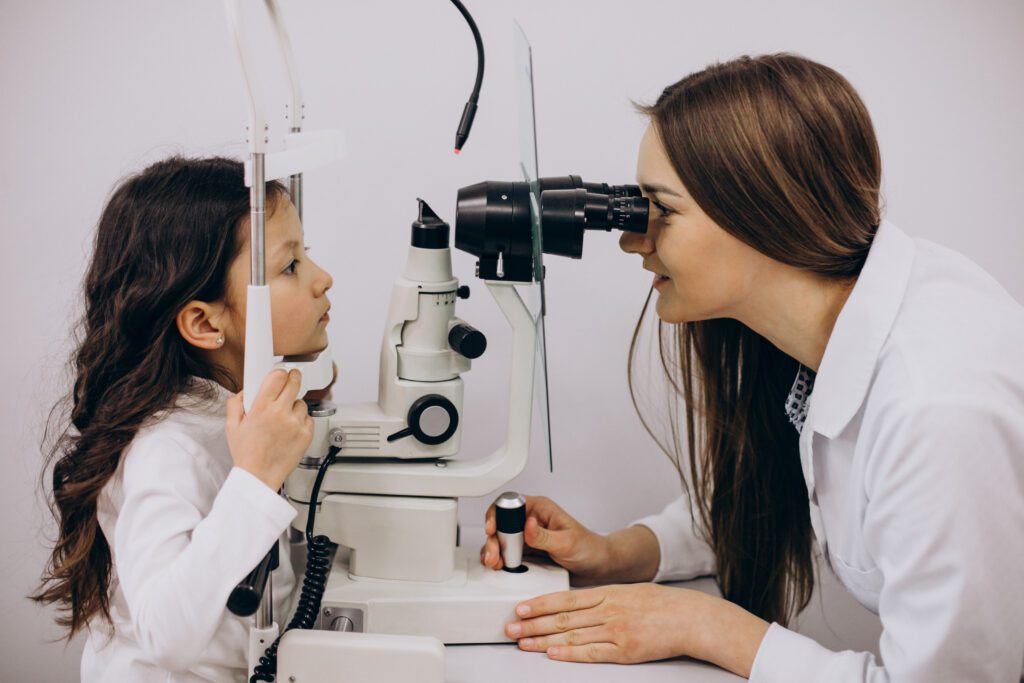
Your child’s assessment starts with a comprehensive pediatric exam, then adds myopia-specific diagnostics: corneal mapping, baseline measurements to track eye growth, binocular vision testing and a detailed history of risk factors. We explain each treatment option — how it works, what daily life with it looks like, and what monitoring involves — and build a plan together. Follow-up visits track progress objectively, so you see whether treatment is working rather than guessing.


Prolonged close work, including screens, is associated with faster progression, while time outdoors in natural daylight is protective. Alongside any lens or drop therapy, we coach families on practical habits: outdoor play targets, reading distance, and screen breaks that fit real school-week life. Small daily changes support the clinical treatment — they don’t replace it, since ordinary glasses and habits alone do not slow eye growth.
Coverage varies by provider. Many extended health plans cover the exam portion and contribute to specialty lens fees; MSP covers the basic eye exam for children under 19. We confirm your coverage, provide detailed receipts for claims, and offer financing options for larger programs. Book a dedicated myopia assessment online or call or text (604) 777-7579 — mention myopia management so we reserve extra time and set up baseline diagnostics.


Myopia control isn’t a product we sell — it’s a program we run. Every child gets baseline diagnostics, a treatment matched to their eyes and lifestyle, and scheduled follow-ups where progress is measured, charted and explained to parents in plain language. If a treatment isn’t performing, we change it. Families from Marpole, Oakridge, Richmond and Burnaby drive to us for exactly this reason: they want a clinic that tracks results, not one that fits a lens and waves goodbye. It starts with a pediatric eye exam — MSP-covered, so there’s no barrier to finding out where your child stands.


There are several ways to manage myopia (nearsightedness), but are they appropriate for children with dry eye syndrome? In most cases, the answer is ‘yes.’


As a parent of a nearsighted child, you can be proactive about preserving your child’s eye health and vision. Read on to learn about myopia management, and whether your child could be a candidate.


Orthokeratology, also known as “ortho-k”, is a safe and effective method of correcting vision while slowing the progression of myopia in children. If you are the parent of a nearsighted child, learn how ortho-k can also help preserve your child’s eye health.


A comprehensive explanation of the mechanics of ortho-k.


Atropine therapy are prescription eye drops that have been shown to stop or slow down the progression of myopia (nearsightedness).
No. Once the eye has grown longer, existing myopia cannot be reversed — but its progression can be slowed by roughly half with Ortho-K, myopia-control glasses, multifocal soft lenses or atropine drops. That’s why starting early matters.
No. Standard single-vision glasses correct blur but do nothing to slow eye growth. Only dedicated myopia-control treatments are proven to slow progression.
Yes. Decades of research show orthokeratology is safe for children when fitted and monitored by an experienced optometrist. Our fittings include corneal mapping and scheduled follow-ups to keep your child’s eyes healthy
As soon as myopia is diagnosed and progressing — most commonly between ages 6 and 12, when progression is fastest. Treatment is also effective for teens.
In most cases, yes. We assess the tear film as part of every myopia workup and choose options — such as myopia-control glasses or atropine — that suit children with dry eye or sensitive eyes.
Yes. Dr. Yee speaks Korean, and our team supports patients from a wide range of backgrounds across Vancouver. If you would prefer to be seen in a specific language, let us know when you book, and we will do our best to match you.